
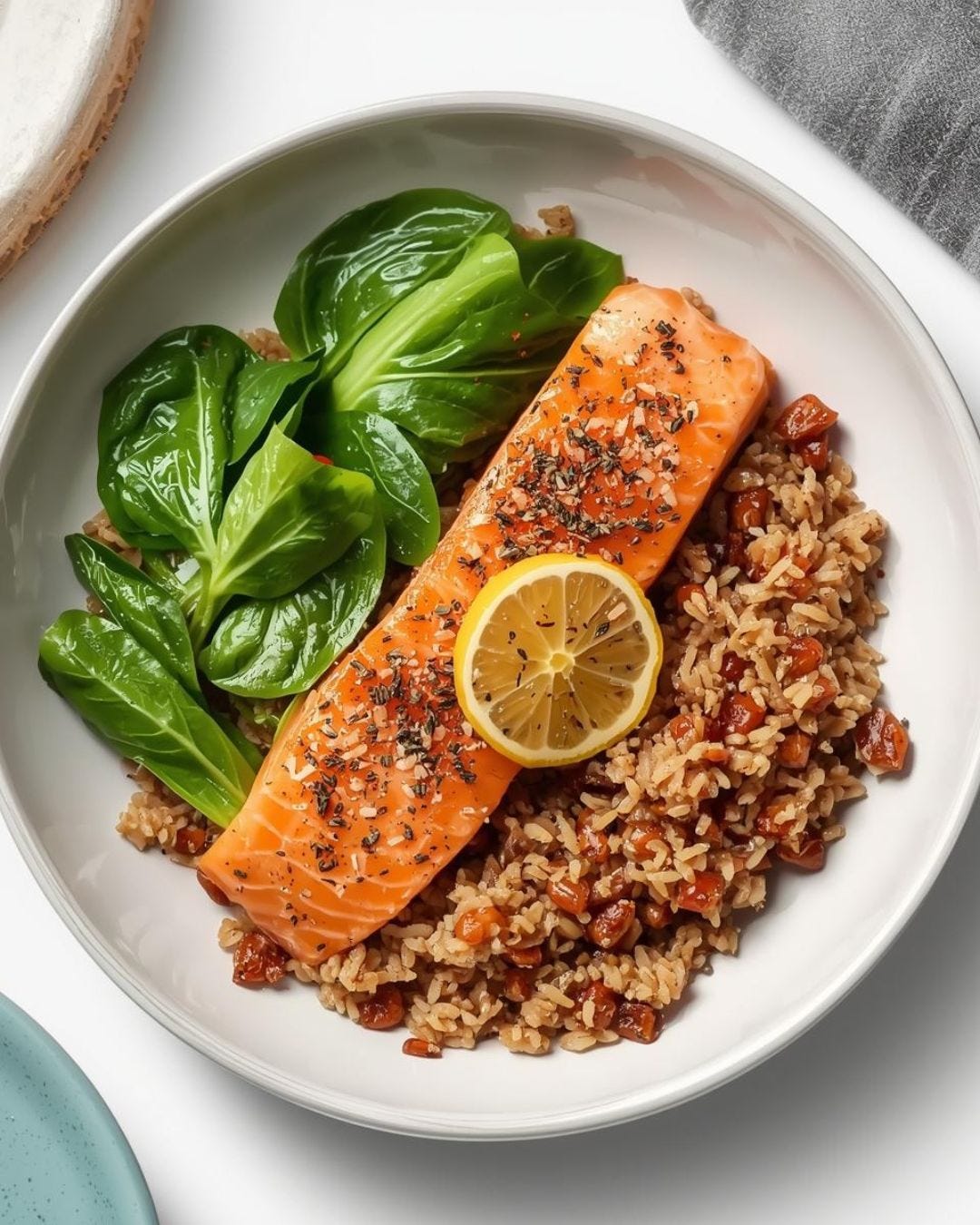
Meal Timing & Nutrition Routines: Stabilizing Mood Through Rhythms
The conversation around nutrition and depression is often dominated by trends, supplements, or restrictive rules that aren’t realistic for people who are already struggling. But the truth is simpler—and far more grounded in evidence.
It’s not about eating “perfectly.” It’s about eating predictably.
Today’s article is about rhythm:
meal timing, metabolic stability, and removing the decision fatigue that so often traps people in low energy, low motivation, and worsening depression.
This matters more during winter, when many people—especially LGBTQ+ folks, neurodivergent people, and anyone living with Seasonal Affective Disorder—experience dips in energy, appetite, and executive functioning. Depression and overwhelm make it harder to plan meals, harder to shop, and harder to regulate hunger cues. Without structure, the result is often skipped meals, crashes, irritability, increased anxiety, and a mood that sinks even lower.
What helps?
A predictable eating routine that supports your body’s natural regulation systems—without requiring willpower.
Let’s break down why meal rhythms work, what the science says, and how to set up a simple, compassionate system that supports you even on hard days.
Why Predictable Eating Helps Depression
Depression affects neurobiology in ways that directly disrupt eating patterns:
Appetite becomes irregular—too low, too high, or fluctuating.
Hunger cues become unreliable or absent.
Executive functioning drops, so meal planning and prepping feel impossible.
Blood sugar becomes unstable, triggering mood dips that mimic sadness or anxiety.
Skipped meals lead to the “metabolic crash”—fatigue, irritability, fog, hopelessness.
But meal timing helps stabilize these systems. The goal isconsistency, not perfection.
Social Rhythm Therapy,behavioral activation, andmetabolic researchall converge on the same principle:
Regular meals at predictable times support mood regulation.
Here’s why:
1. Blood Sugar Stability
Irregular eating leads to blood sugar spikes and crashes, and this leads to mood crashes.
Regular meals lead to stable glucose, and this leads to more stable emotional states.
2. Circadian Rhythm Support
Hunger, energy, hormones, and sleep all follow internal clocks.
Meal timing is one of the strongest external cues for regulating those metabolic clocks.
3. Less Decision Fatigue
Knowing when you’ll eat eliminates dozens of small choices a day. Your brain can relax.
4. More Energy for Behavioral Activation
Regular food = more available energy = more capacity to engage in value-based activities.
5. A Subtle Lift in Dopamine and Serotonin
Meals at consistent times support neurotransmitter balance and increase predictability, which itself reduces stress.
The Core Structure: Three Anchored Meals + Optional Snacks
A simple, depression-friendly structure looks like this:
Breakfast within 1–2 hours of waking
Lunch at roughly the same time every day (4-5 hours after breakfast)
Dinner at roughly the same time every day (4-5 hours after lunch)
Optional stabilization snacks every 3–4 hours
Snacks are helpful when your schedule gets altered. For example, if you decide to eat with friends or on a date and the meal will be later than your usual dinner, have a snack to tide you over. If your dinner is fairly early, a snack can be helpful before bed.
You do not need to eat large meals.
You simply need to eatsomethingat regular intervals.
Even this small structure reduces mood dips dramatically for many people.
Creating a Weekly Meal Template (Reduce Decisions to Almost Zero)
Most people with depression (and nearly all neurodivergent people) struggle not with eating, but withdecidingwhat to eat.
Avoid trying to decide what to eat based on “what you feel like having” and instead, have aweekly meal template.
Instead of mealplanning, which requires constant decision-making, this uses afixed rotation: You can avoid boredom by simply using different sauces or condiments: Pasta on Monday with marinara, pasta on Friday with alfredo. Tacos on Tuesday with red salsa. Tacos on Saturday with green salsa.
Example Template
Breakfast: same 1–2 options all week
Lunch: same 1–2 options all week
Dinner: a 3-meal rotation you repeat
Snacks: 2–3 easy choices
Examples of “easy choices”:
Rotisserie chicken + microwaved veggies
Sandwich + fruit
Breakfast burrito
Soup + bread
Eggs + toast
Frozen meal + salad
Yogurt bowl + granola
Hummus + veggies or crackers + cheese
This isnotabout eating “healthy.”
It’s about feelingfed,stable, andless overwhelmed.
When your brain is depressed, the simplest template is the best template.
Snack Timing for Mood Stability
Snacks are not optional for many people with depression, ADHD, ASD, or AuDHD.
They’re metabolic support. If you choose to snack, extend the length of time between meals. Breakfast within 1-2 hours of waking up. A snack 3 hours later. Lunch 3 hours after that. A snack 3 hours after that. Dinner 3 hours after that.
Aim for:
One snack mid-morning
One mid-afternoon
A small evening snack if needed
Ideal snacks combine:
Protein or fat+carb
(for sustained energy rather than spikes)
Examples:
Cheese + crackers
Peanut butter + apples
Nuts + dried fruit
Greek yogurt
Hummus + pita
Tuna packets
A protein bar
This prevents the “afternoon crash” where many people spiral emotionally.
The Gut–Brain Axis (Without Hype)
Yes, gut health and mood are connected—but the field is full of pseudoscience.
Here’s the grounded version:
The gut and brain communicate through nerves, hormones, and immune pathways.
Regular meals and diverse whole foods help regulate digestion and inflammation.
You donotneed supplements, restrictive diets, or “cleanses.”
The most evidence-supported practices are simple:
Eat fiber from fruits, vegetables, grains, and legumes.
Include some fermented foods if you tolerate them well.
Stay hydrated. (Water tracking apps can tell you how much to drink and tracking can motivate compliance.)
Eat regularly.
That’s it.
Support for Neurodivergent People (ADHD, ASD, AuDHD)
Many neurodivergent folks struggle with:
time blindness
irregular hunger cues
forgetting meals
hyperfocusing until they’re starving
executive dysfunction around cooking or dishes
food texture or sensory preferences
Here are ND-friendly strategies:
1. Externalize the routine
Timers
Alarms
Phone reminders
Automatic app prompts
Visual checklists on the fridge
2. Keep food extremely simple
Simple = doable.
Doable = consistent.
Consistent = stabilizing.
3. Use “body doubling” if needed
Eat on video with a friend, partner, or community.
This dramatically increases follow-through.
Better yet, sit down and eat with other people in your home.
4. Embrace “same foods”
If certain foods are safe, easy, and predictable—use them.
5. Reduce barriers
Precut veggies
Prewashed salads
Frozen options
Paper plates
Ready-made proteins
Subscription meal kits
Your job is not to be creative.
It’s to stay nourished, consistently.
How D/s Partners Can Support Meal Routines
Just like in Articles 1 and 2, power exchange can enhance stability and emotional regulation.
Meal routines are one of the easiest and most supportive structures to build into a dynamic.
When the Submissive Is Struggling with Depression
A Dominant can support by:
Setting consistent meal times
Sending gentle reminders or check-ins
Asking for photos (“Show me your breakfast”)
Creating a weekly meal rotation
Preparing meals or ordering food
Helping the submissive reduce decision fatigue
Framing eating meals on a schedule as obedience, devotion, or service
Holding expectations steady but compassionate
Caring for the submissive’s needs isn’t role reversal; it’s leadership.
When the Dominant Is Depressed
A submissive can support by:
Preparing or organizing meals as service
Maintaining the household meal structure
Gently prompting the Dominant to eat on schedule
Handling grocery lists or meal prep
Offering the Dominant two choices rather than open options
Using rituals—like serving a plate, kneeling briefly, or sharing a check-in
Providing nourishment without infantilizing
The goal isn’t to take over.
It’ssupporting the Dominant’s authority by following through on the support they say they want from you.
Healthy D/s is mutual regulation.
Food rhythms are one of the most powerful ways partners can hold each other steady through depressive seasons.
How to Start This Week (Simple, Compassionate Steps)
Step 1: Choose a fixed breakfast time.
Even if it’s just coffee + yogurt.
Step 2: Choose 1–2 breakfasts for the whole week.
No daily decisions.
Step 3: Choose a simple lunch option.
Use a rotation.
Step 4: Pick three easy dinners.
Repeat them all week.
Step 5: Add two stabilization snacks.
Schedule them.
Start with structure, not perfection.
You can refine later.
Closing Thoughts
Depression makes eating irregular, chaotic, or nonexistent.
Meal routines restore the rhythms depression disrupts.
This isn’t about nutrition as morality.
It’s about fuel, stability, and kindness toward a body that’s trying to survive.
Your meals do not need to be impressive.
They need to beconsistent, predictable, and doable, especially on your hardest days.
As you begin to stabilize your body with regular meal rhythms, you’ll likely notice subtle shifts: fewer emotional crashes, a little more clarity, a little less overwhelm. These shifts matter—not because they are dramatic, but because they areevidencethat structure works. And this brings us to the next pillar in depression recovery: learning to recognize and celebrate the tiny victories your brain usually dismisses or minimizes.Article 4is about reclaiming those moments, understanding why micro-successes are chemically powerful, and using them to slowly rewire a depressed brain toward motivation, hope, and forward momentum.
Disclaimer
These articles are for educational purposes only and are not a substitute for professional mental health care, therapy, medication, or residential treatment. If you are experiencing suicidal thoughts or feeling unsafe, please seek immediate help from emergency services, a crisis hotline, or the nearest hospital.
If you or someone you know is in crisis, you can contact:
988 Suicide & Crisis Lifeline —call or text988
1-800-273-TALK (8255) —still active and routes to the same network
LGBT National Hotline — 1-888-843-4564
The Trevor Project (ages ~13–24) — 1-866-488-7386or textSTARTto678-678
Trans Lifeline — 1-877-565-8860
You deserve support, safety, and real-time care.


