
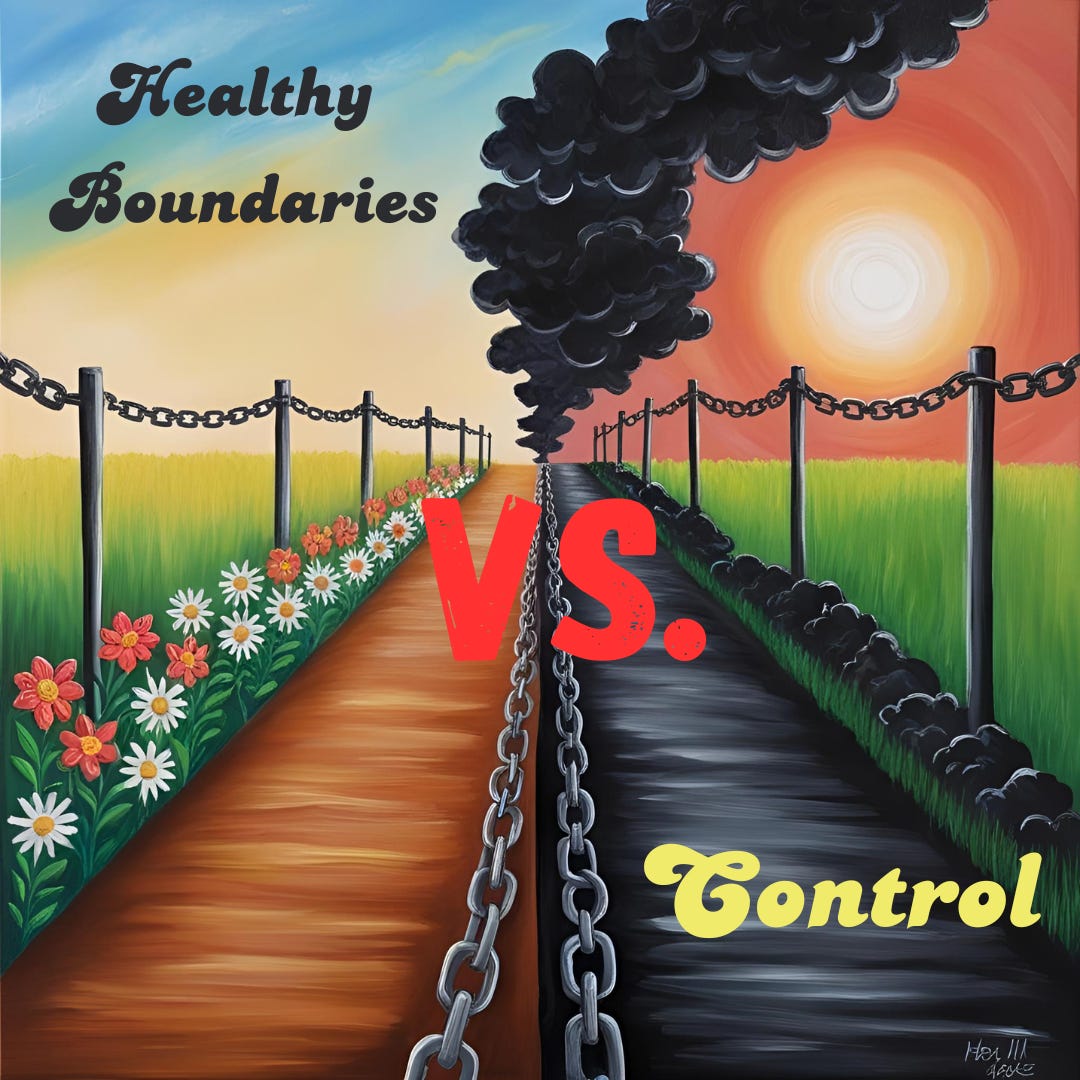
Is It a Boundary... or Is It Control?
Have you ever tried to set a boundary and then found yourself wondering later… was that really a boundary, or was I trying to control someone?
You're not alone. People often say things like, “I’m feeling hurt, so I need to set a boundary.” But here’s the thing: not all boundaries are created equal. Some are ethical—others are actually attempts to control or coerce, just dressed up in the language of boundaries.
🎯 Ethical Boundaries Start with Human Rights
Before we can even get to the boundary-setting part, we need to start with a shared understanding of basic human rights in relationships.
This isn’t just about romantic or sexual relationships. These principles apply to every kind of relationship: coworkers, friends, family—anywhere we connect with other humans.
I created a tool called The Personal Responsibility Flowchart that helps you assess whether a boundary you’re trying to set is ethical—or if it’s actually a form of control.
But before you can use it, you need to understand what you're protecting: your basic rights.
🔐 13 Basic Human Rights in Relationships
As a mental health professional, I’ve seen how damaging it is when these rights are violated. This list is the foundation for ethical boundaries and healthy connection.
We all have the right to:
Full bodily and sexual autonomy
Be safe from physical mental and emotional violence or the threat of violence
Access adequate food, water, medication, medical care, disability accommodations, and sleep
The privacy of our thoughts and personal space
Determine our own identity and values, including the right to explore who we are, and to identify our natural orientations, and the freedom to build our public social identities around these things, or to keep these things private, if we wish, and the right to determine limits on our own behavior based on our values
Decide our own interests and how we want to spend our time and energy
Decide with whom we wish to be friends and whom we wish to love, and to invest time and energy in maintaining those relationships
Be spoken to respectfully and treated with dignity
Express ourselves as long as well doing so we speak to others respectfully and treat them with dignity
Control our possessions, money, livelihood, and assets
Consent or not consent to be in a physical space, to interact, to have sex, to engage in relationships, to determine the depth of a relationship, and to consent or not consent to relationship agreements
Withdraw consent at any time, as long as while doing so we consider the ethics around how we withdraw our consent
Be given the information we need in order to engage in informed consent, provided in a timely, clear, and honest manner.
💥 The Power Factor: Why Some Boundaries Are Harder to Defend
Here’s a hard truth: it’s easier to defend our rights when we feel powerful. When the person violating our rights has more power—like a boss or partner we depend on—defending ourselves becomes riskier and harder.
That power imbalance increases the harm we experience. It’s not just the violation—it’s the helplessness and fear we feel when we’re not able to protect ourselves.
That’s why real boundaries are never about controlling someone else. They’re about protecting your rights, not managing someone else’s behavior.
🧠 Want Help Sorting This Out?
I created The Personal Responsibility Flowchart to help you figure out:
Is this actually an ethical boundary?
Or am I trying to control someone else’s behavior because of my discomfort?
This tool, along with tons of guidance, scripts, and examples, is in my book:
📘Cultivating Connection: A Practical Guide for Personal & Relational Growth in Ethical Non-Monogamy
Available on my website or Amazon
📬 Stay Connected
If this post resonated with you, here are a few ways to go deeper:
👉Subscribe to this newsletter so you never miss a new post
👉Share this with a friend who’s struggling with boundaries
👉Leave a comment below—I’d love to hear your thoughts
Let’s keep learning, growing, and creating more ethical, connected relationships—together.
—
In Joy and Connection,
—Sander T. Jones, LCSW
Therapist. Educator. Relational Nerd.


